Product 01 · Scaffold Intelligence
Scaffold decisions with the evidence attached.
Bioreactor and scaffold objectives become reproducible candidates, analytical screens, governed solver requests and reviewable evidence packages.
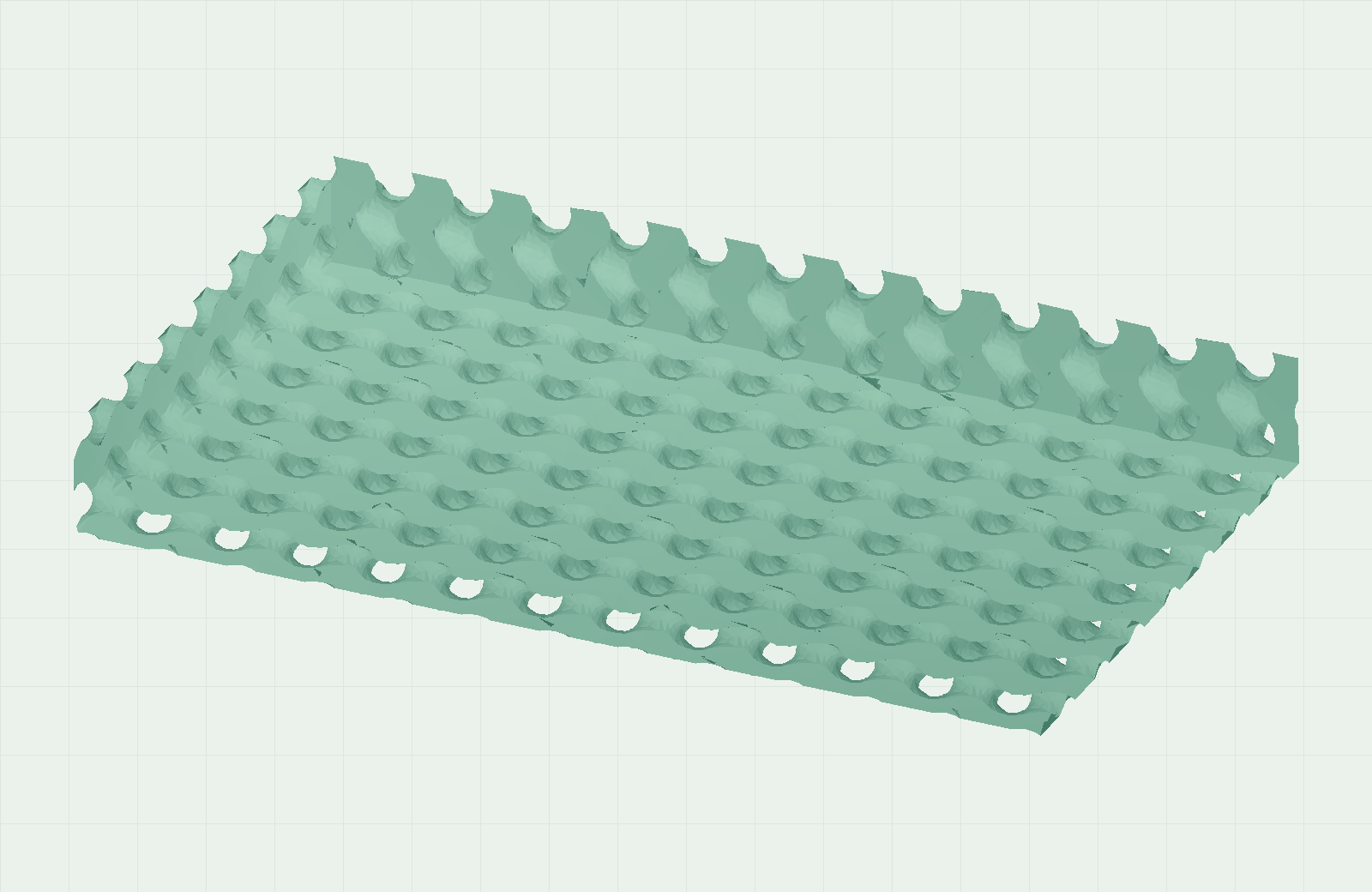
main · 33627bd · STL sha256 2201aa9a… · 25 × 15 × 3 mm
Computational STL render, not microscopy. Printability and wet-lab performance remain unvalidated.Open evidence →
Design identity should survive every representation.
Workflow
Escalate from cheap screening to governed truth.
Optimisation and learning advise. A truth-run ticket, compute decision and exact engine inputs control promotion.
- 01Compile
Mixed-format client objectives become a typed programme.
- 02Generate
Procedural grammar emits candidates and canonical identity.
- 03Screen
Analytical proxies and bounded AI rank without claiming truth.
- 04Govern
Budget, geometry authority and promotion policy issue a ticket.
- 05Solve
OpenFOAM or FEniCSx consumes its retained numerical input.
- 06Seal
Fields, convergence, receipts and boundaries form the bundle.
Actual result
Connected geometry. Real solver observation. Visible uncertainty.
The canonical reference is not concept art. The OpenFOAM sequence is not presented as grid-independent.
main · 33627bd · STL sha256 2201aa9a… · 25 × 15 × 3 mm
Computational STL render, not microscopy. Printability and wet-lab performance remain unvalidated.Open evidence →
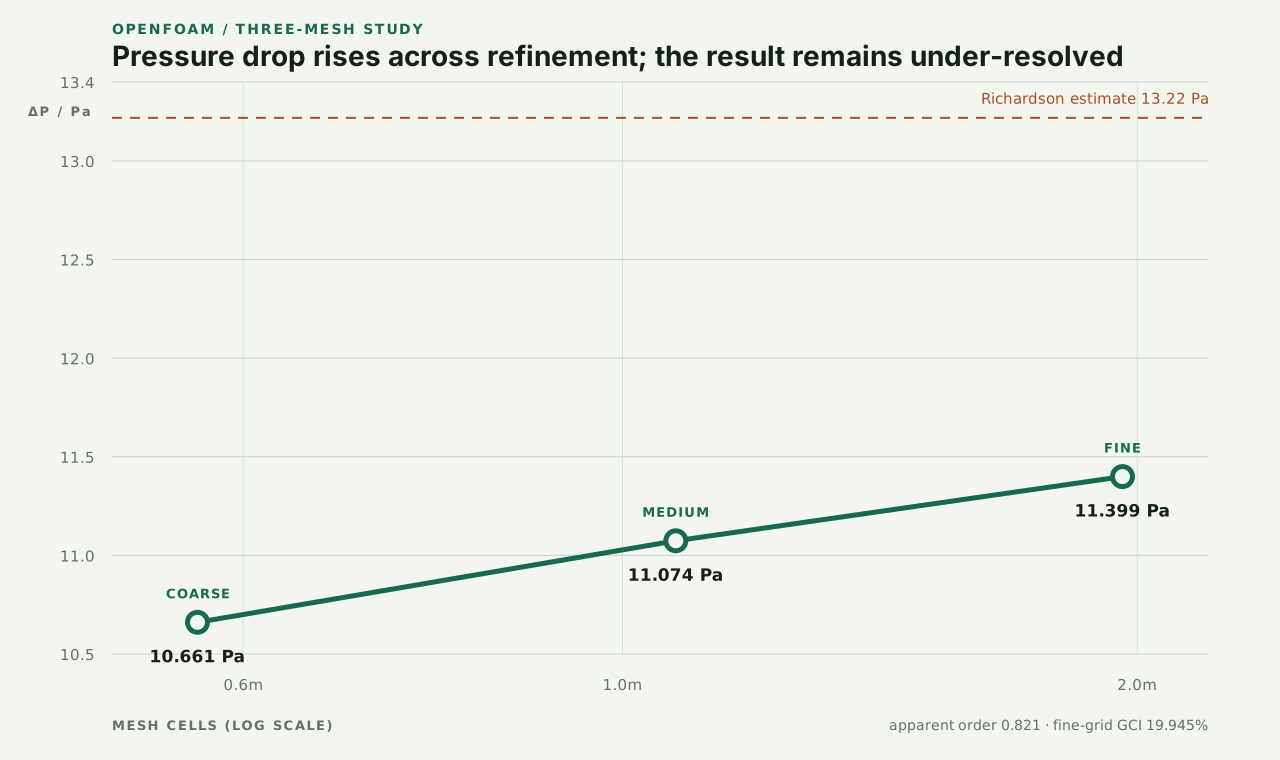
564,291 → 1,960,469 cells · ΔP 10.661 → 11.399 Pa
Fine-grid GCI 19.945%; under-resolved, standalone and not a measurement.Open evidence →
- Geometry
- 120,000 watertight manifold triangles
- Topology
- 1 + 1 connected solid + connected void network
- Porosity
- 0.499 canonical geometry QA record
- Fine mesh
- 1.96m cells in the third OpenFOAM level
- Fine ΔP
- 11.399 Pa standalone numerical observation
- Fine GCI
- 19.945% further refinement required
1,000 mixed briefs tested the software boundary.
Methods
Native engines keep their authority.
Representation, numerical solve and learned approximation remain separate layers.
OpenUSD
Canonical composition, provenance and stable design identity across the handoff thread.
Does not replace STL, Gmsh, polyMesh or native fields.
OpenFOAM
Perfusion and transport truth path with retained case identity, fields and convergence evidence.
Current canonical sequence remains under-resolved and unsealed.
FEniCSx
Exact 3D DOLFINx execution mechanism with retained MSH bytes, tags and tested MPI paths.
Canonical full-field mechanics campaign is still required.
Surrogates
Corpus, training, registry and admission mechanisms exist; learned models remain advisory until a truth corpus supports promotion.
No scientific surrogate is currently admitted.
Fourier methods
The current fixed-resolution model maps global rFFT features through dense layers.
It is explicitly not a true FNO or PINO.
Current boundary
Retained solver runs and remaining evidence gaps.
Execution records and scientific validation establish different things.
The retained record contains 51 executed governed coarse OpenFOAM runs with truth-bundle identifiers, but every completed bundle remains completed_with_pending_evidence and predates the current post-mesh authority receipt. A current exact-geometry claim requires matching source geometry, transformed input, numerical mesh, scaffold patch and solver fields.