Product 02 · Zentari Nano
Carrier design across models, motion and flow.
Candidate manifests move from fast analytical references through optimisation and controlled CFD without losing their evidence lineage.
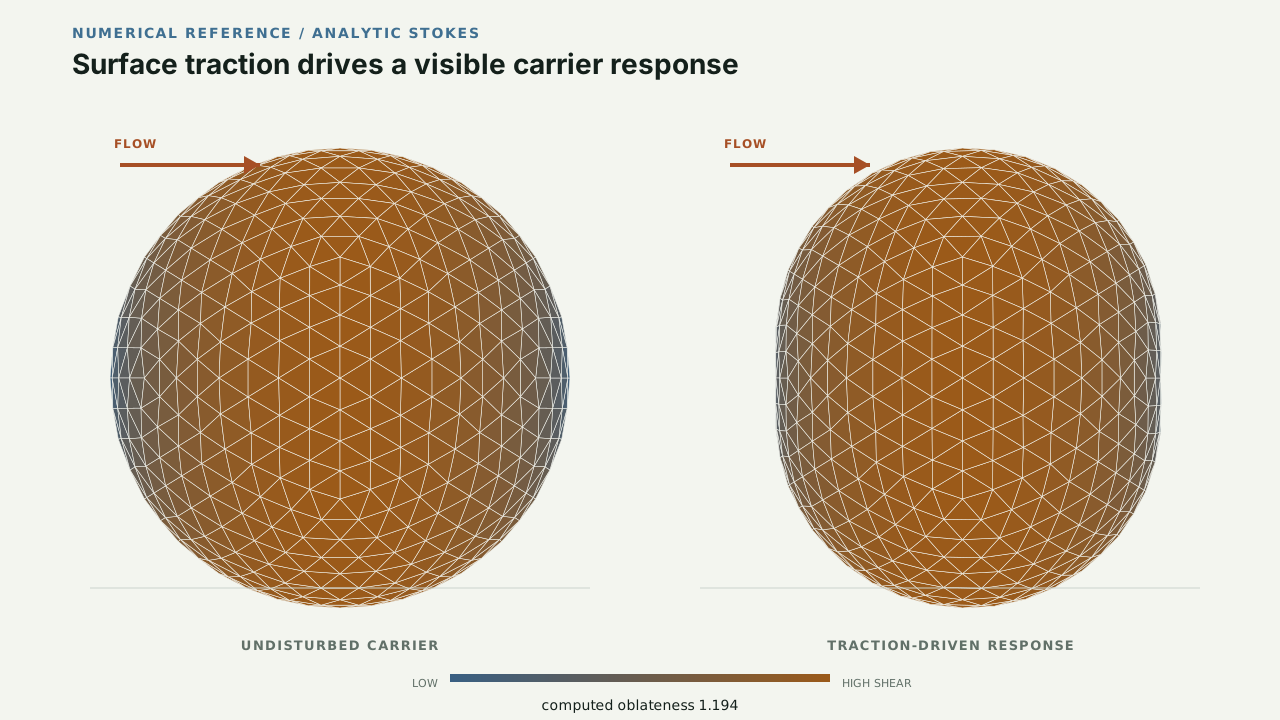
main · 1cacc2d · 14 µm radius · 160 nm slip length
Analytic creeping-flow reference; deformation is not OpenFOAM, solved FSI, hardware or laboratory evidence.Open evidence →
A score is useful only when its physics and provenance remain inspectable.
Workflow
Fast exploration, controlled escalation.
Baseline methods remain available while challengers earn promotion through real-data benchmark reports.
- 01Specify
Carrier geometry, payload, actuation and fluid context.
- 02Evaluate
Analytic Stokes and BD/SD establish fast references.
- 03Search
NSGA-II, MAP-Elites, ParEGO or qNEHVI behind a common seam.
- 04Challenge
Selected cases escalate to a governed OpenFOAM runner.
- 05Validate
Convergence, physics QC and non-convergent demotion.
- 06Retain
Manifest, fields, Pareto set and benchmark evidence.
Actual results
A field view and an internal reference floor.
The hero is analytic, not CFD. The benchmark is simulated, not measured.
main · 1cacc2d · 14 µm radius · 160 nm slip length
Analytic creeping-flow reference; deformation is not OpenFOAM, solved FSI, hardware or laboratory evidence.Open evidence →
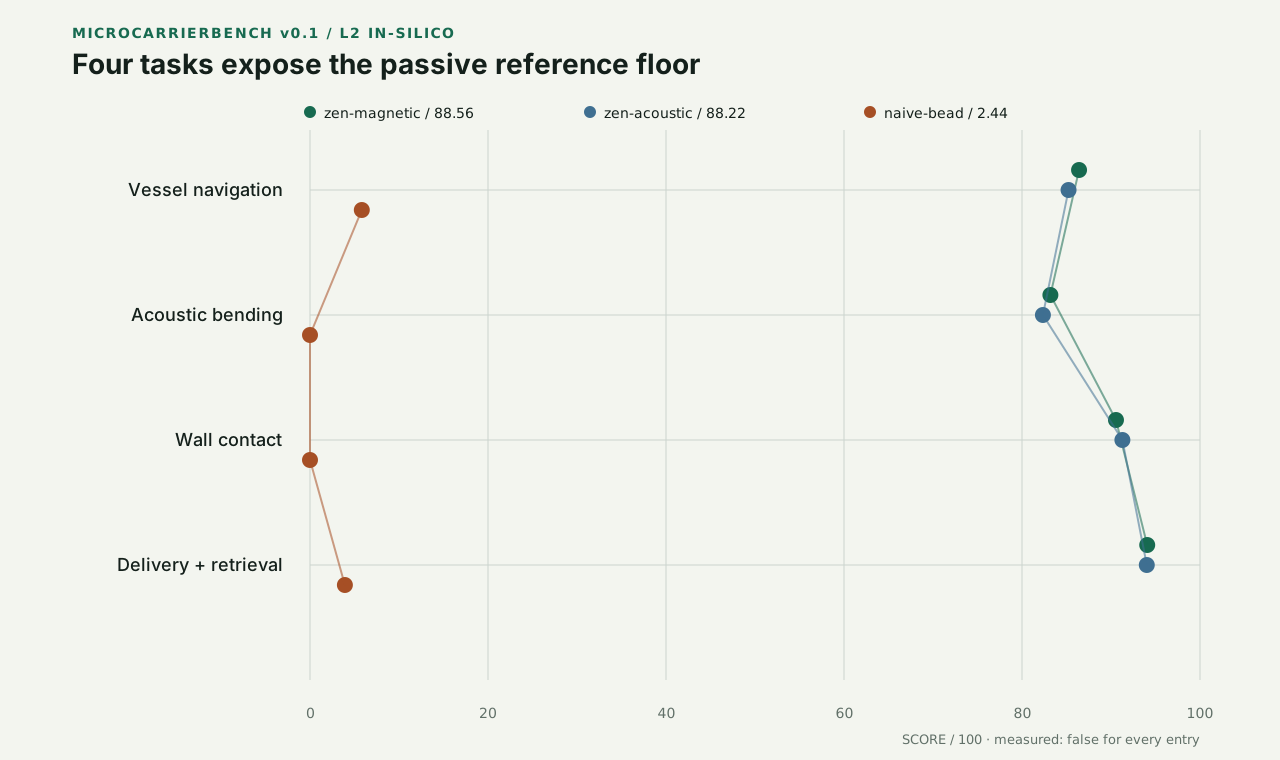
zen-magnetic 88.56 · zen-acoustic 88.22 · passive floor 2.44
Every entry is unmeasured and in-silico; no external benchmark or sim-to-real gap is available.Open evidence →
- Magnetic reference
- 88.56 MicroCarrierBench v0.1 aggregate
- Acoustic reference
- 88.22 internal simulated baseline
- Passive floor
- 2.44 reference bead aggregate
- Reference radius
- 14 µm analytic field figure input
- Slip length
- 160 nm declared analytic parameter
- Measured entries
- 0 every leaderboard record is in-silico
Methods
A validation-gated learning stack.
Each stage has a default baseline and a challenger that cannot become default on name or novelty alone.
Forward models
Analytic Stokes, physics-aware test doubles, real OpenFOAM runners and uncertainty-aware surrogate interfaces.
Figure 03 uses the analytic path.
Optimisation
Multi-objective, quality-diversity and Bayesian searchers share benchmark and promotion records.
Search finds candidates; it does not validate them.
Active learning
Random, uncertainty and diverse-uncertainty acquisition strategies can target expensive labels.
Real OpenFOAM or measured labels are required for promotion.