Product 05 · Zentari Cell
A digital cell must change with its lifecycle.
Population fate and culture environment evolve through deterministic reference engines while stage-specific protein-programme identity remains explicit and reviewable.
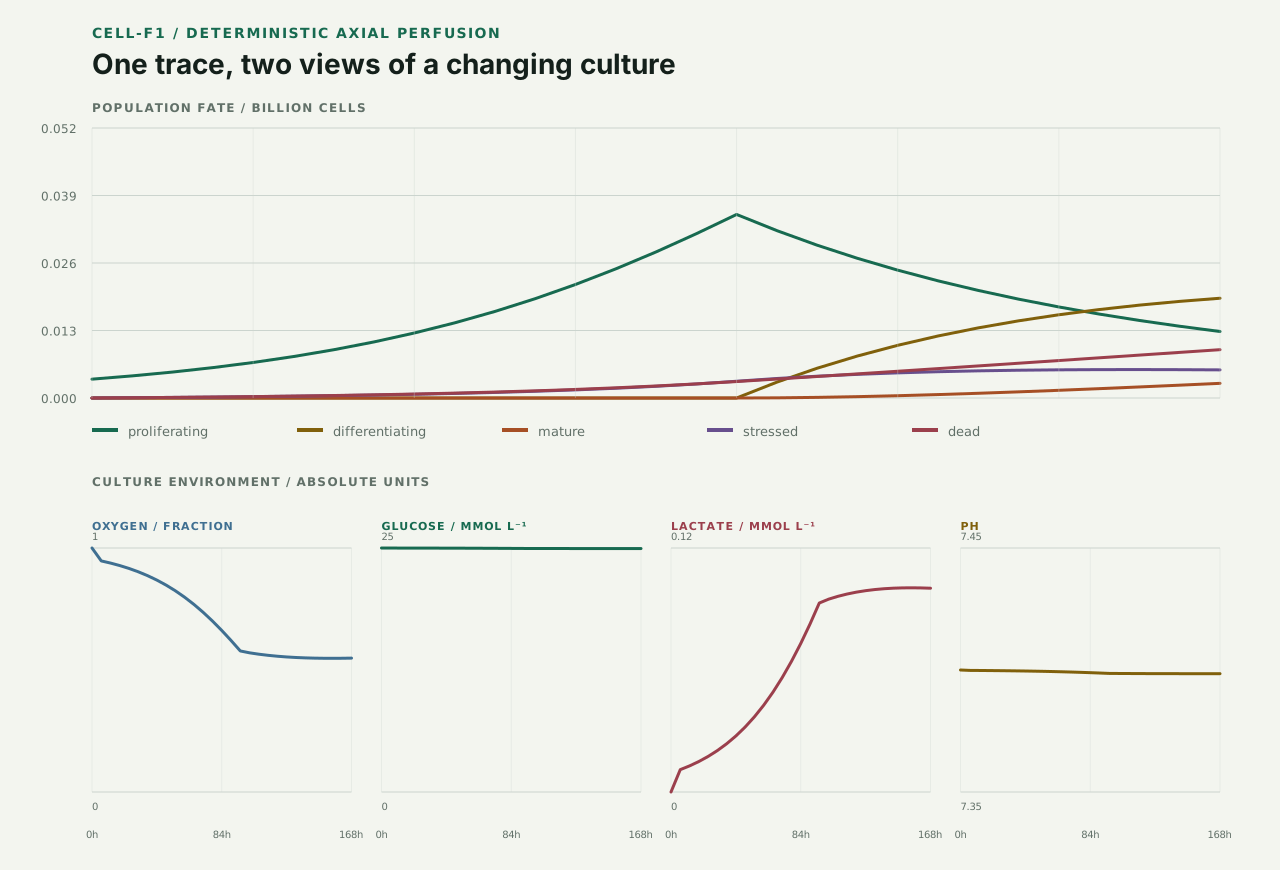
celltrace-7d87ae1e… · 174 snapshots · 0–168 h
Reduced-order, literature-order structural priors; no biological or laboratory validation.Open evidence →
A cell is not one static parameter set.
Workflow
From declared biology to a challengeable trace.
The validation spine keeps geometry, engine fidelity, lifecycle context and evidence authority explicit.
- 01Declare
Cell line, lifecycle stage, culture and geometry context.
- 02Bind
Protein-programme identity and permitted directed transition.
- 03Run
Cell-F0 or axial tanks-in-series Cell-F1 reference engine.
- 04Trace
Population fate, oxygen, glucose, lactate and pH.
- 05Verify
Invariants, digests, attempts and numerical checks.
- 06Challenge
Independent solver, imaging and laboratory evidence.
Actual result + contract capability
One retained trace. One honest lifecycle boundary.
Figure 08 is generated by Cell-F1. Figure 09 is a conceptual view of a context-only contract, not a second simulation result.
celltrace-7d87ae1e… · 174 snapshots · 0–168 h
Reduced-order, literature-order structural priors; no biological or laboratory validation.Open evidence →
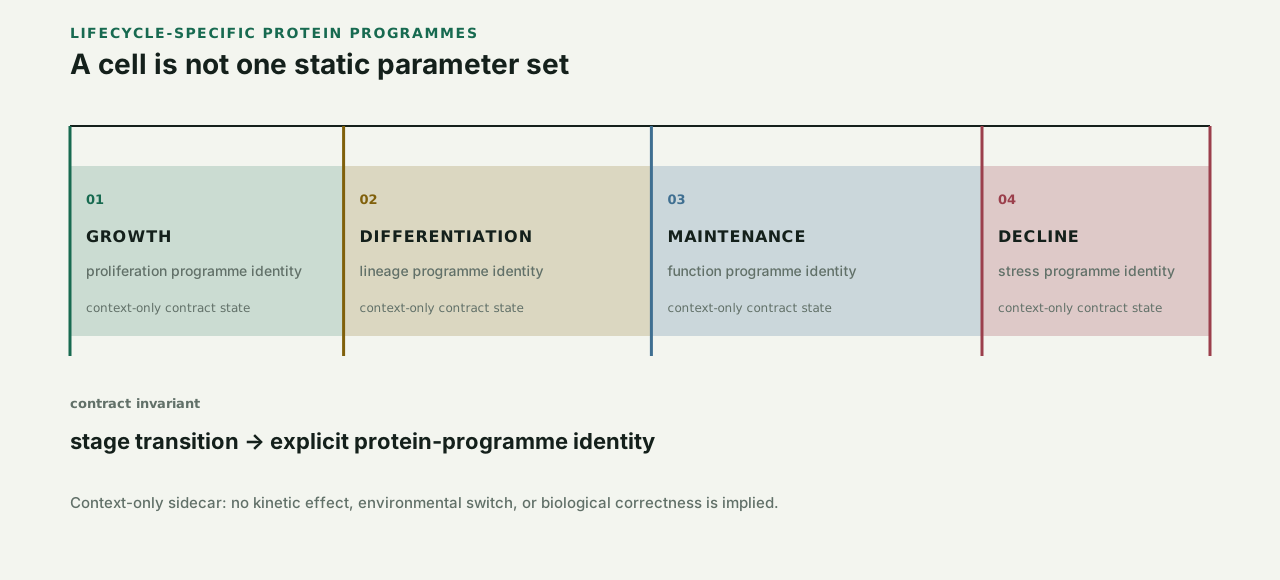
main · 50b21e3 · LifecycleProgramme contract
The sidecar does not alter F0/F1 kinetics and does not validate a real-cell protein catalogue.Open evidence →
- Trace duration
- 168 h seven-day deterministic reference
- Snapshots
- 174 retained in the public trace artifact
- Final viability
- 0.820 simulated fraction, not measured
- Final oxygen
- 0.549 mean axial fraction in the trace
- Final glucose
- 24.944 mmol L⁻¹, simulated
- Lifecycle kinetics
- Unchanged programme sidecar is context only
Different stages require different protein programmes.
Methods
A validation spine before a biological claim.
Reference engines, spatial evidence candidates and future solver handoffs are deliberately separated.
Cell-F1
Deterministic axial tanks-in-series population and environment reference.
Not a conservative 3D finite-volume solver.
Lifecycle context
Stage-specific protein-programme identity and directed transition contracts.
No effect on F0/F1 kinetics today.
OpenUSD
Narrow, core-only qualification for declared local static triangle surfaces.
Not arbitrary CAD or production geometry authority.
Spatial handoff
Contracts bind OpenFOAM and FEniCSx case bytes, builds, numerics and cross-code comparison.
They do not prove either production solver actually ran.
Surrogate governance
Dual-holdout recommendations, safety policy and four-trigger fallback eligibility.
No runtime-authoritative surrogate is admitted.